Design Team
T.R.I.P-S
Novel auxetic stent architecture for arterial support
T.R.I.P-S stands for Tool that Remains In Place – Stent. The project explored a lower-cost stent concept that uses auxetic geometry, negative Poisson’s ratio behavior, and shape-memory material research to reduce collapse risk while preserving blood-flow support.
My RoleConcept development, technical research, prototype modeling, and stress-analysis documentation
Location / DatesJohns Hopkins Design Team
2024 – 2025
OutputsDigital portfolio, auxetic stent concept, CAD/prototype visuals, and analysis slides
Skills LearnedAuxetic geometry, shape-memory materials, technical drawing, prototyping, FEA interpretation
Problem Background
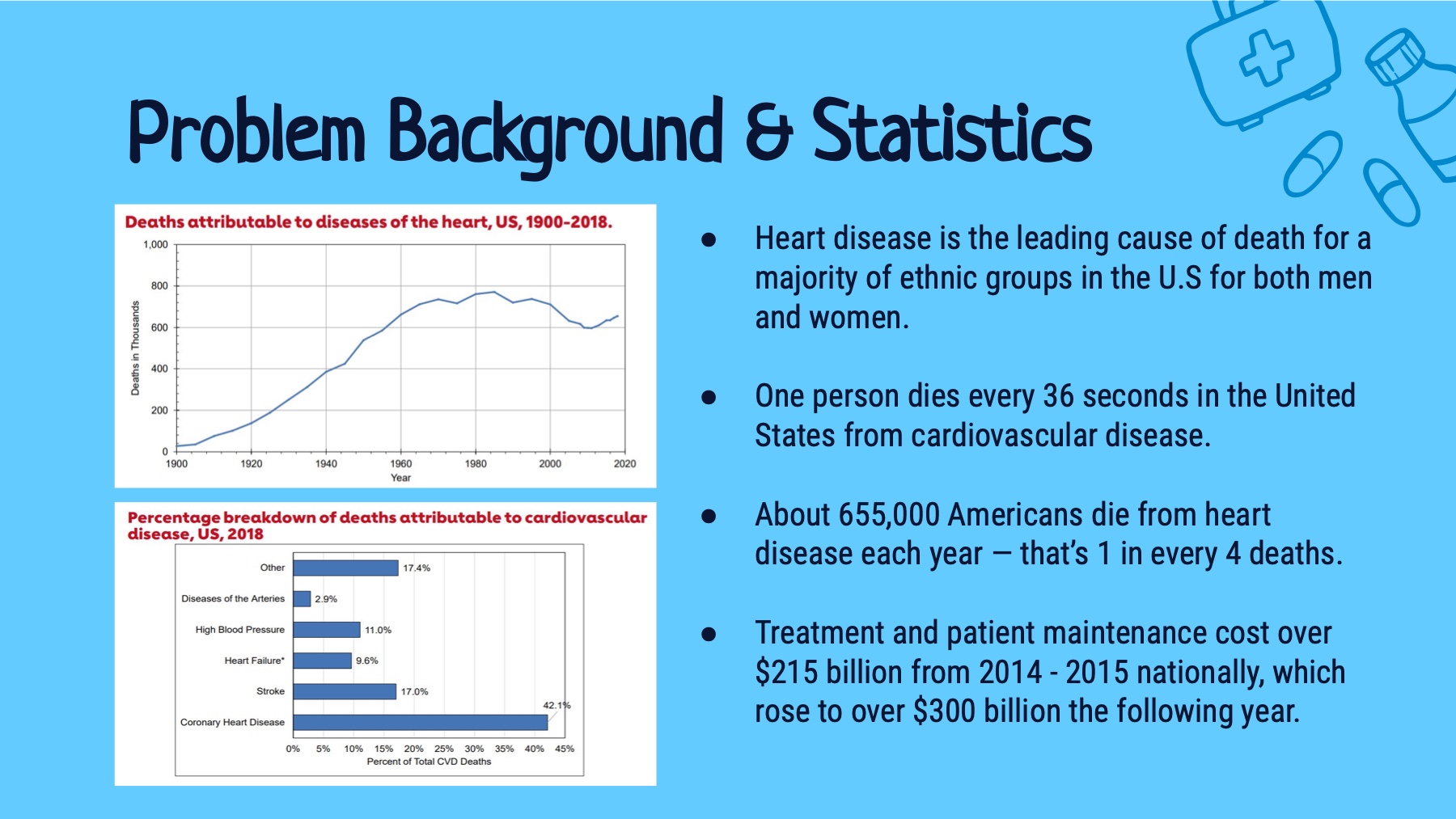
Clinical Context & Statistics
Cardiovascular disease creates a clear need for artery-support devices that can maintain blood flow, reduce recurrence risk, and avoid unnecessary invasiveness.
- Frames plaque buildup and restricted blood flow as the central clinical problem.
- Sets durability and long-term vessel support as core design priorities.
Treatment Landscape
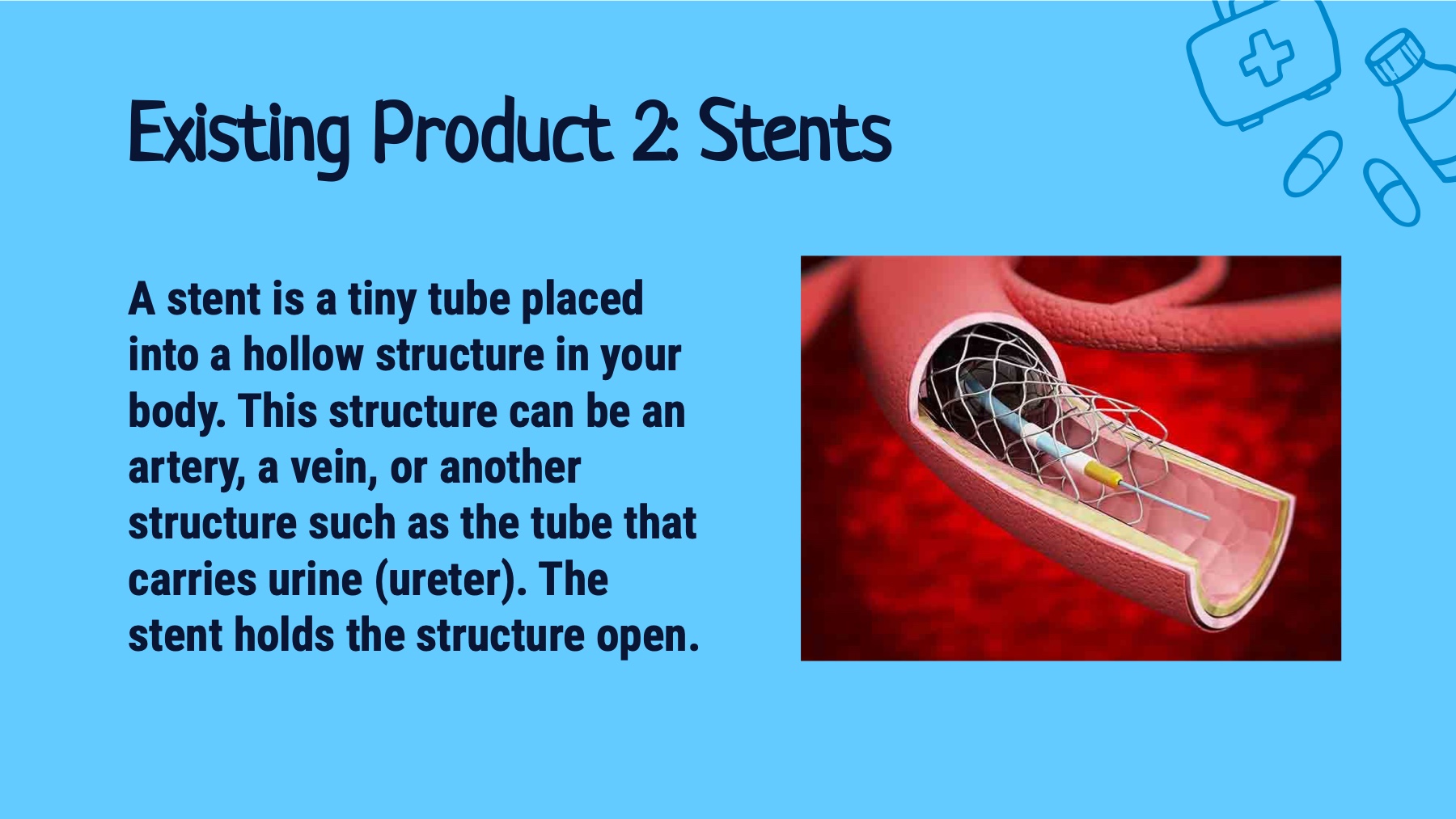
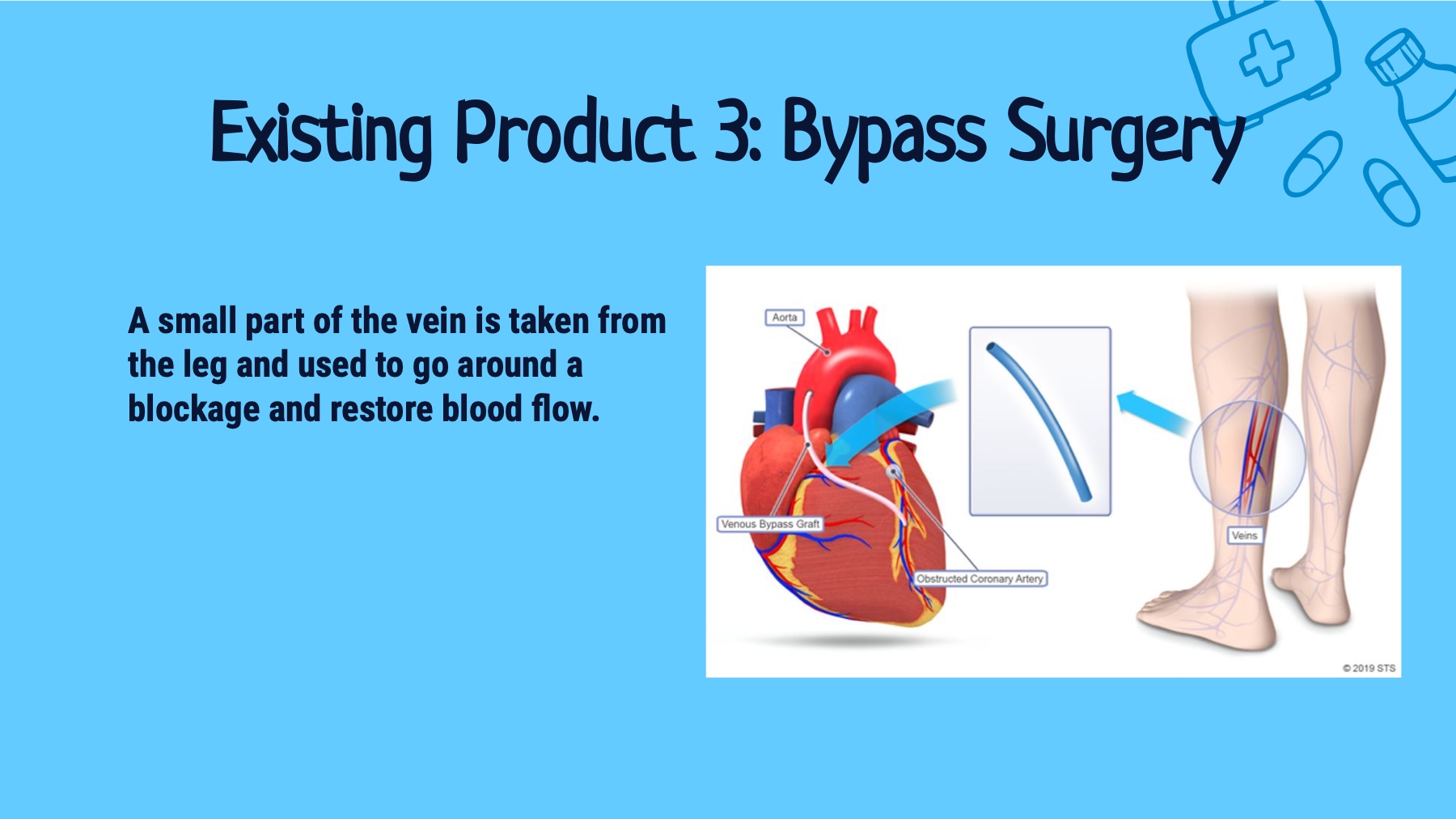
Existing Products
Existing treatments show the tradeoff space the design has to enter: cost, invasiveness, reliability, patient recovery, and long-term performance.
- Compares the concept against current stent-related products and procedures.
- Identifies the gap for a lower-cost structure that resists collapse.
Market Research
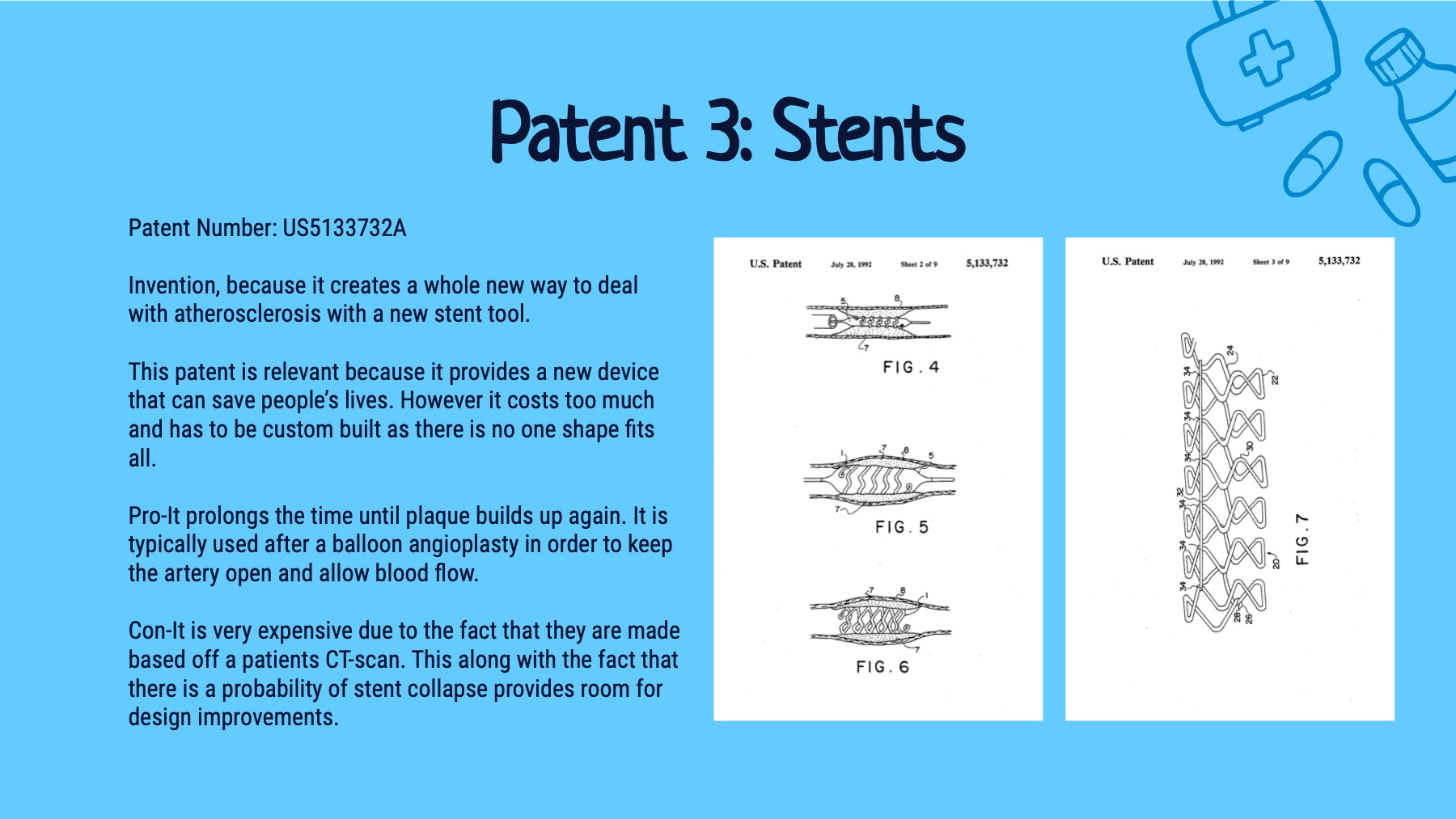
Current Patents
The patent landscape narrowed the design space by showing what has already been attempted in commercial and protected stent technology.
- Connects the design research to real commercial and patented technology.
- Clarifies why the concept needed a distinct mechanical architecture.
Concept Selection
Product Proposals
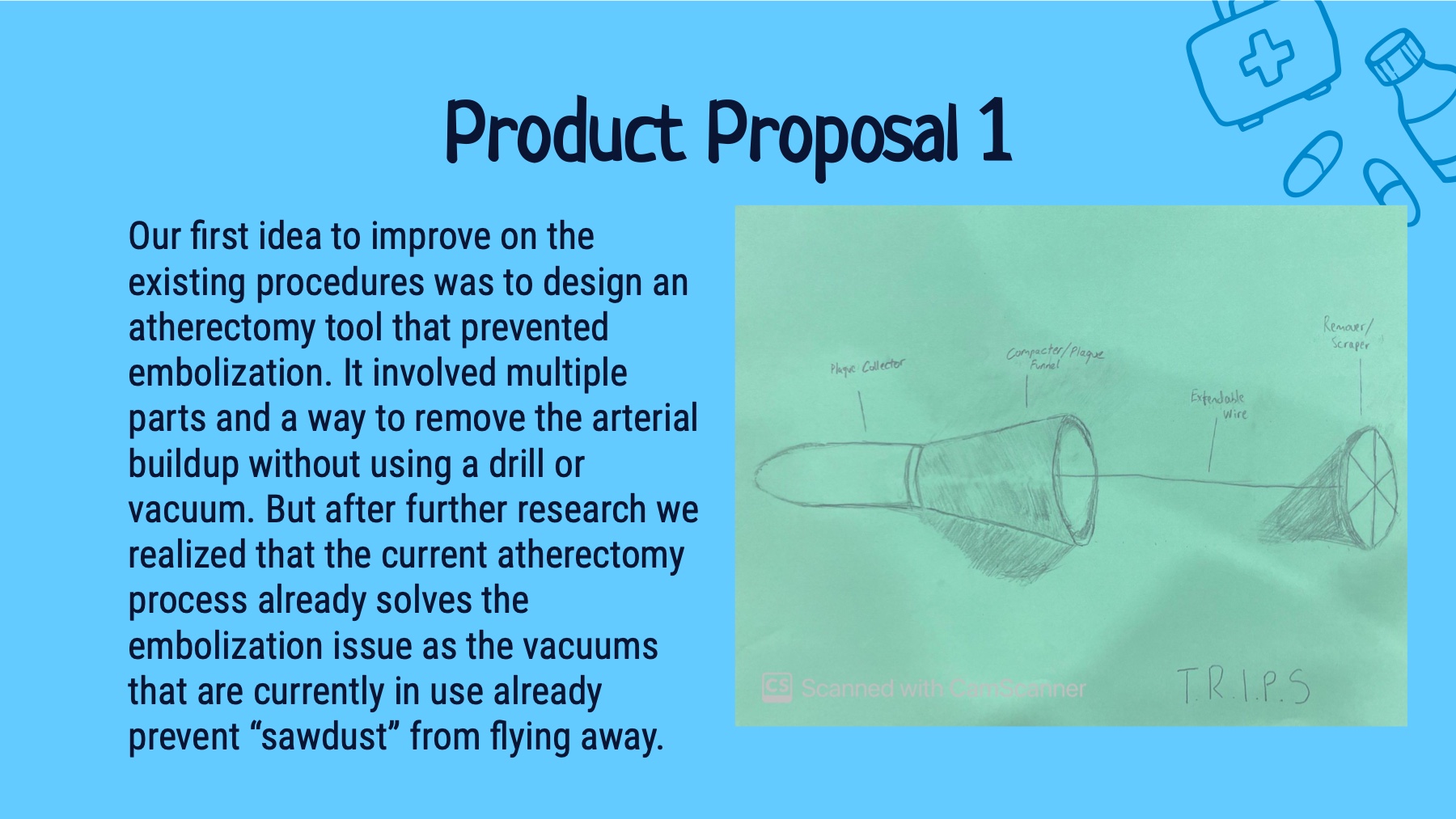
The concept work moved from an early product direction toward an auxetic stent architecture that better matched the mechanical needs of arterial support.
- Shows how the final direction emerged from multiple ideas.
- Prioritizes expansion behavior, collapse resistance, and vessel fit.
Material Behavior
What Auxetic Means
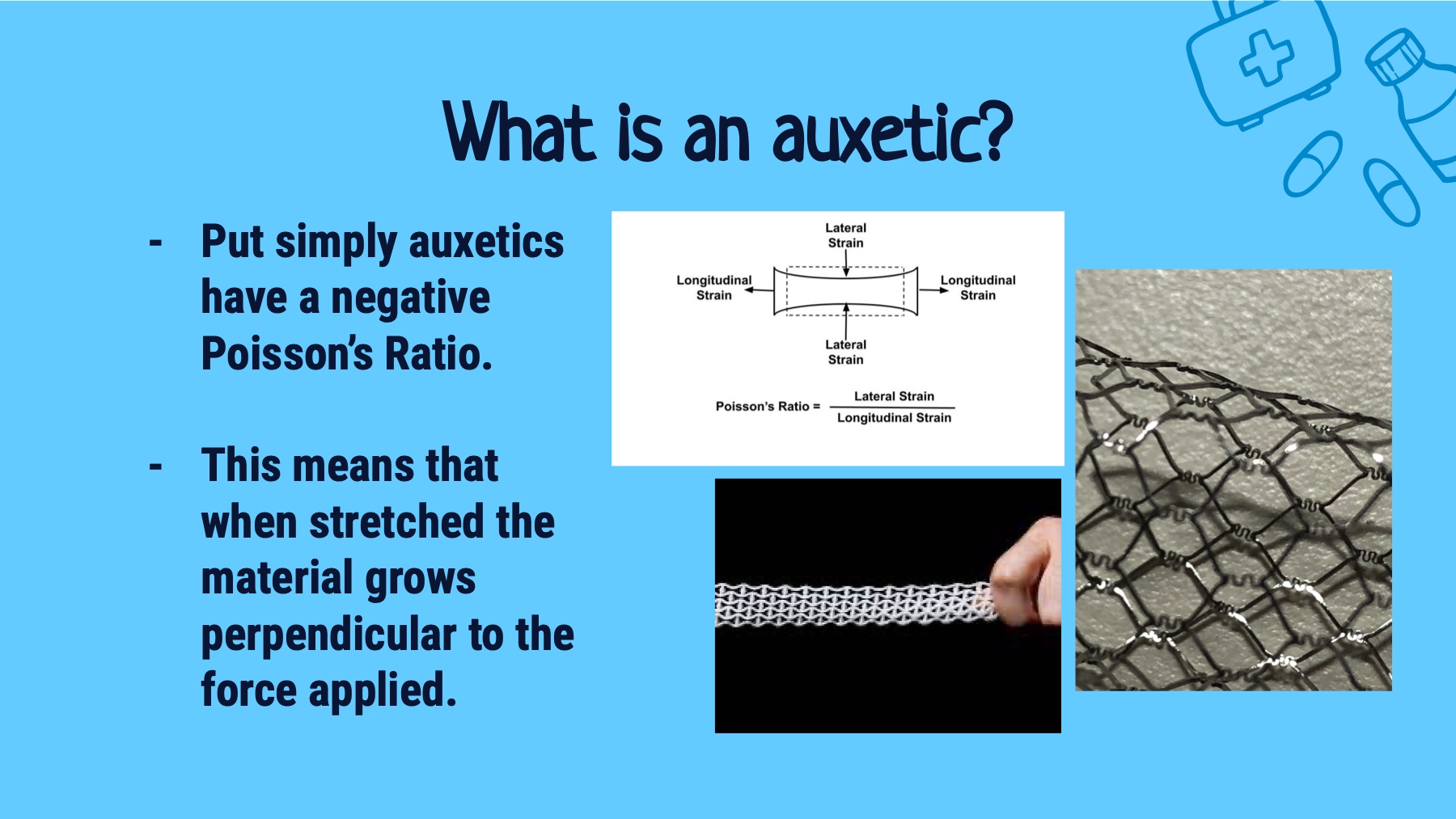
An auxetic structure expands laterally instead of narrowing under tension. That behavior matters because a stent must preserve vessel opening under changing pressure.
- Defines the negative Poisson’s ratio idea visually.
- Links the material concept to collapse resistance.
Design Documentation
Technical Drawings
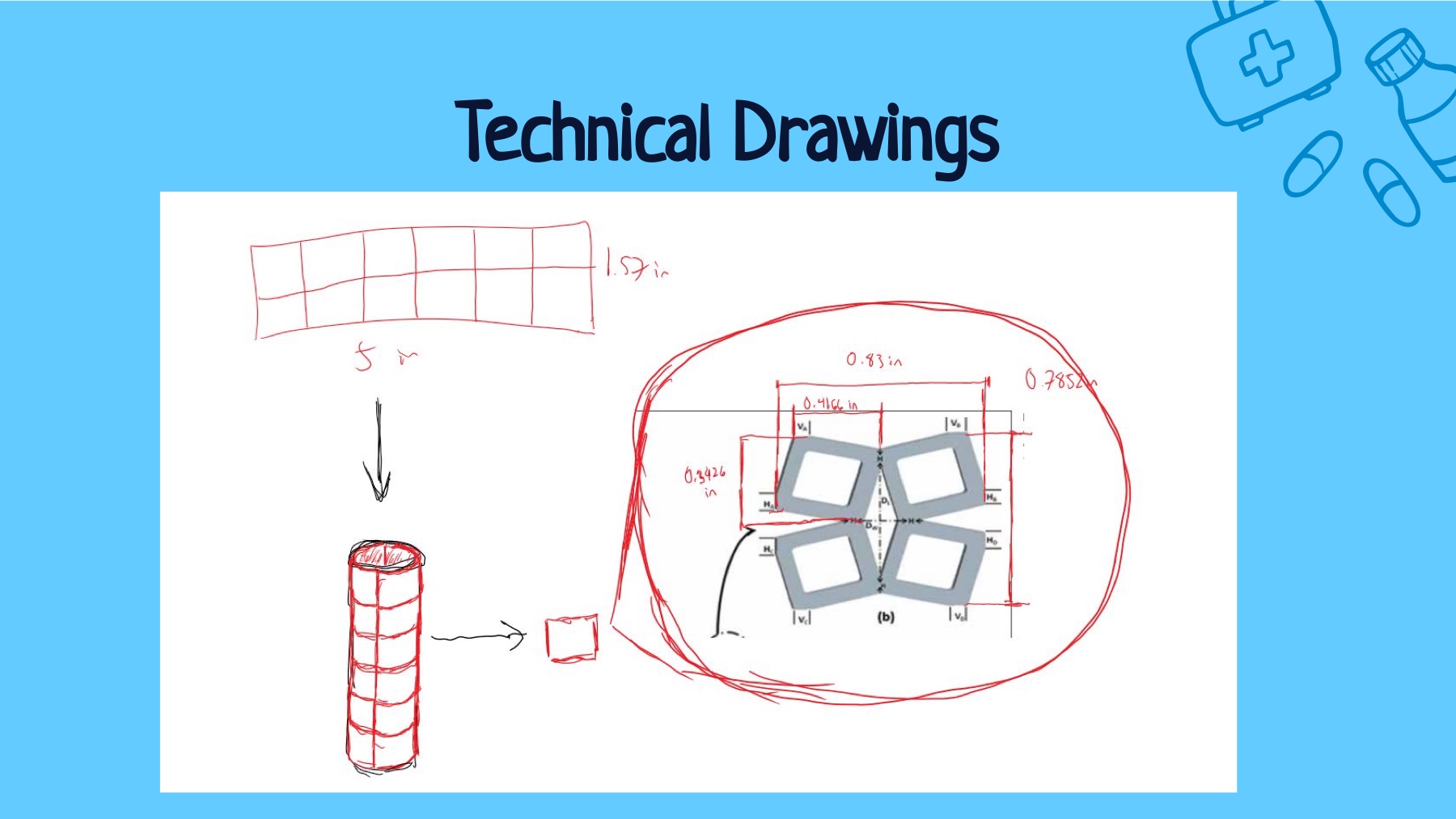
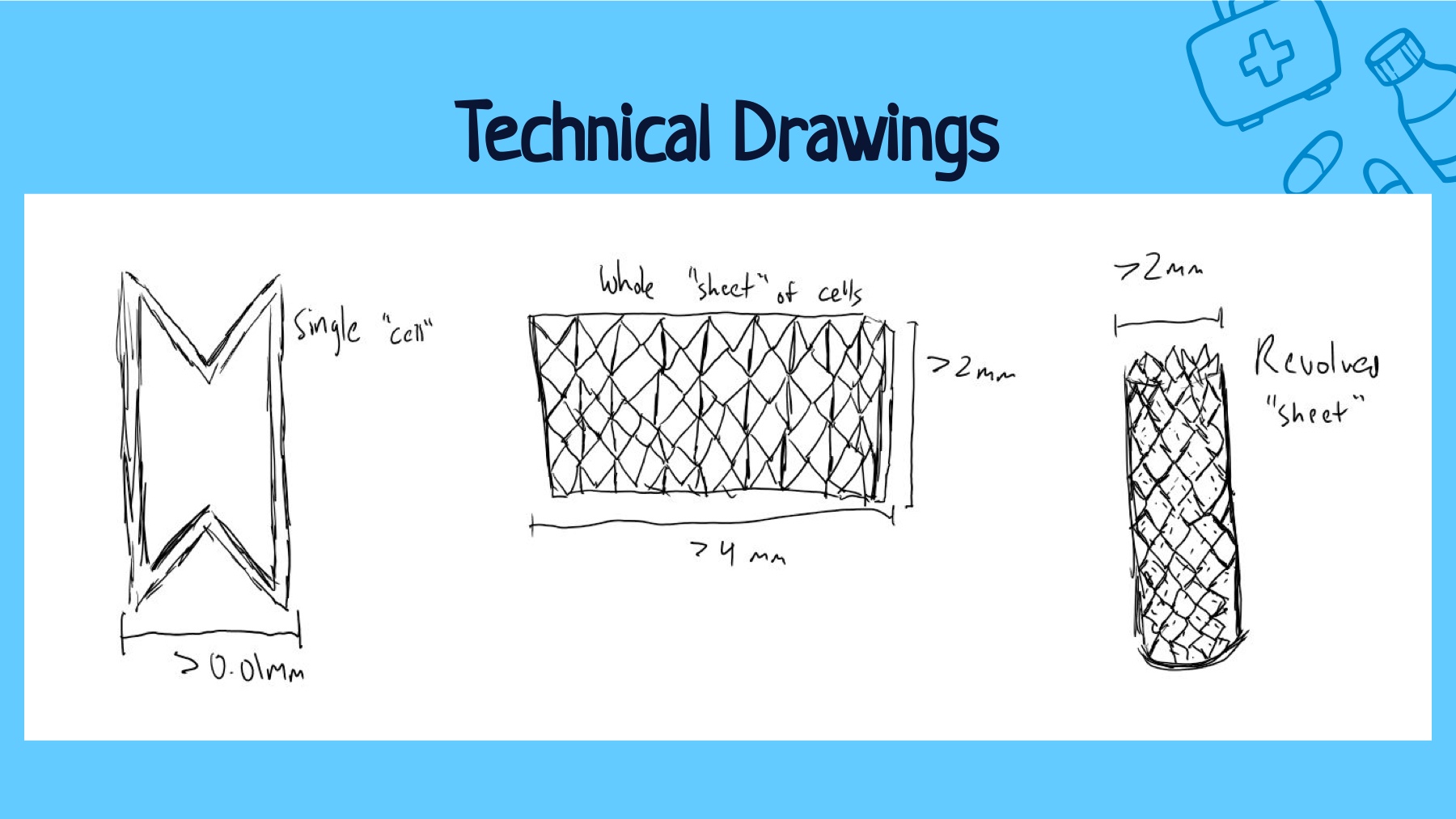
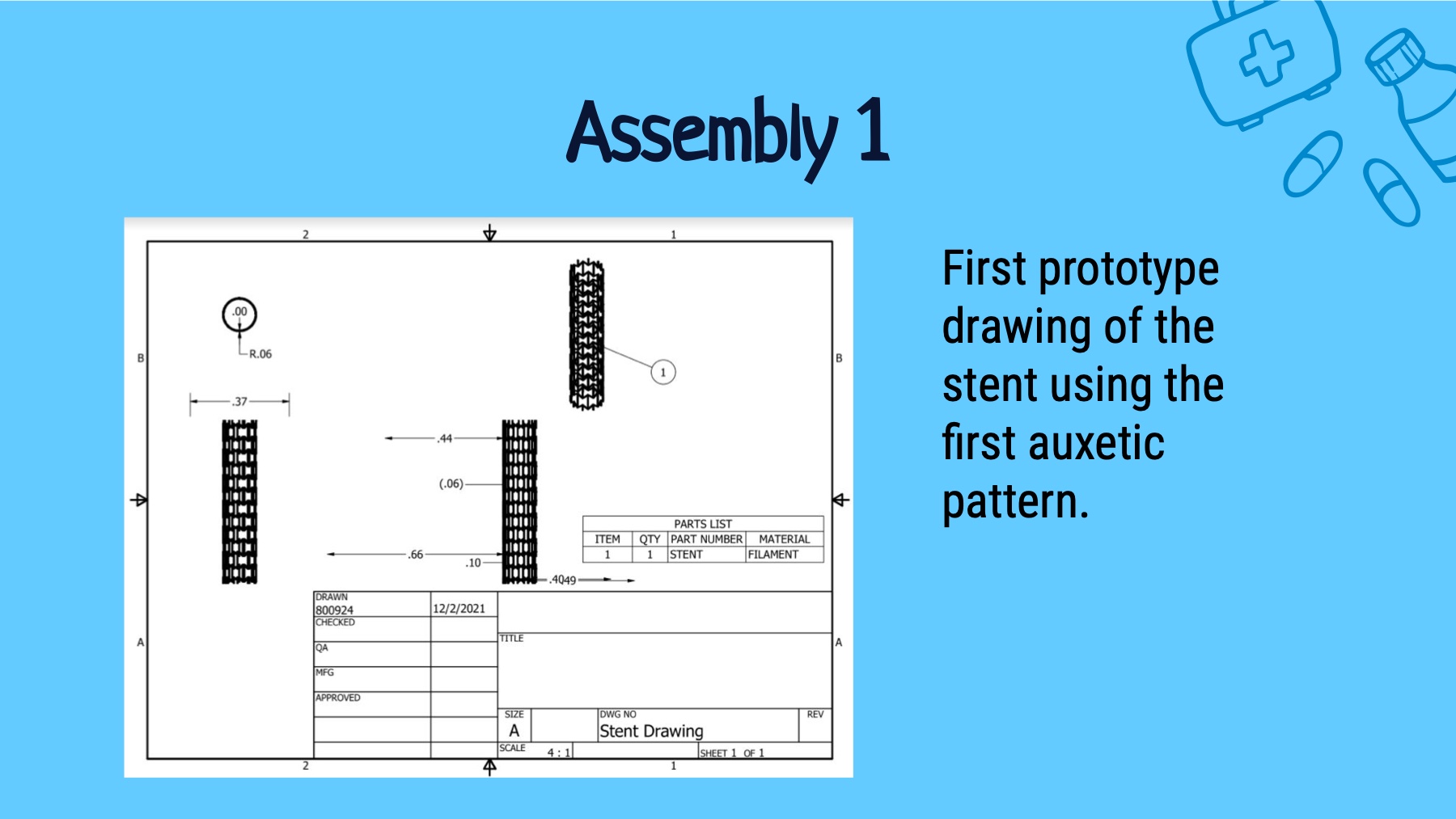
The technical drawings translate the auxetic concept into a buildable form with concrete pattern and assembly details.
- Defines the stent pattern, layout, and build intent.
- Makes the stent architecture easier to evaluate visually.
Build Sequence
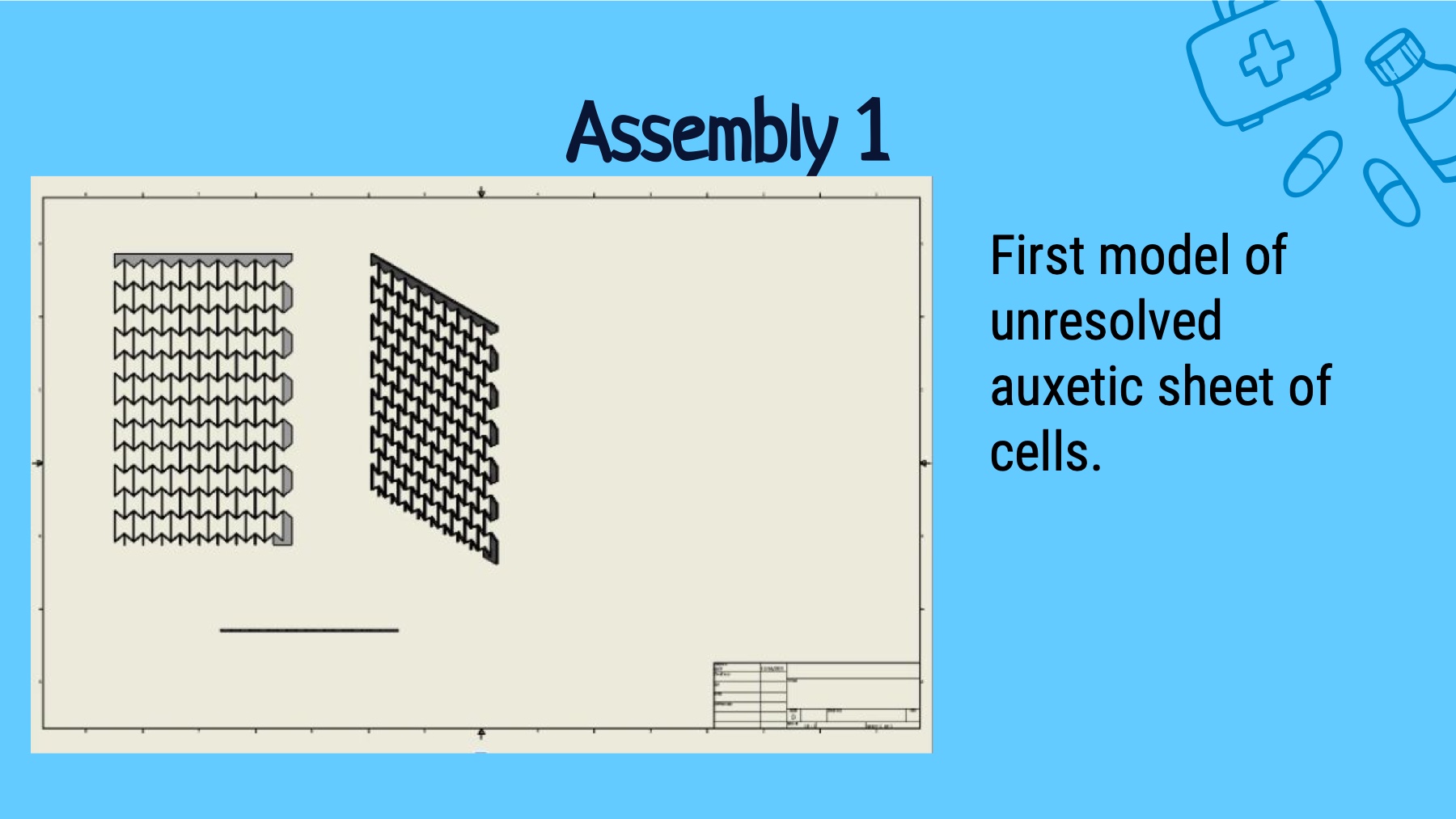
Assembly 1
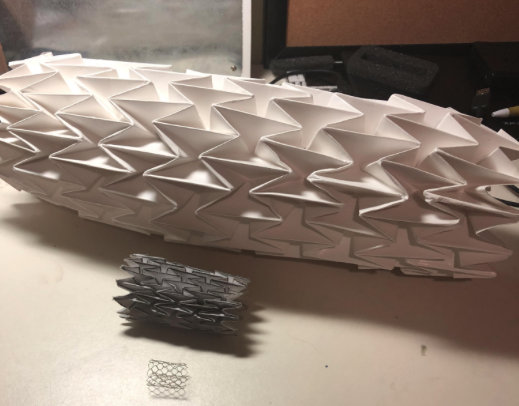
The first assembly direction explores how the flat auxetic pattern could become a physical stent-like form.
- Shows how the technical drawing begins translating into assembly.
- Provides visual evidence of design-for-build thinking.
Build Sequence
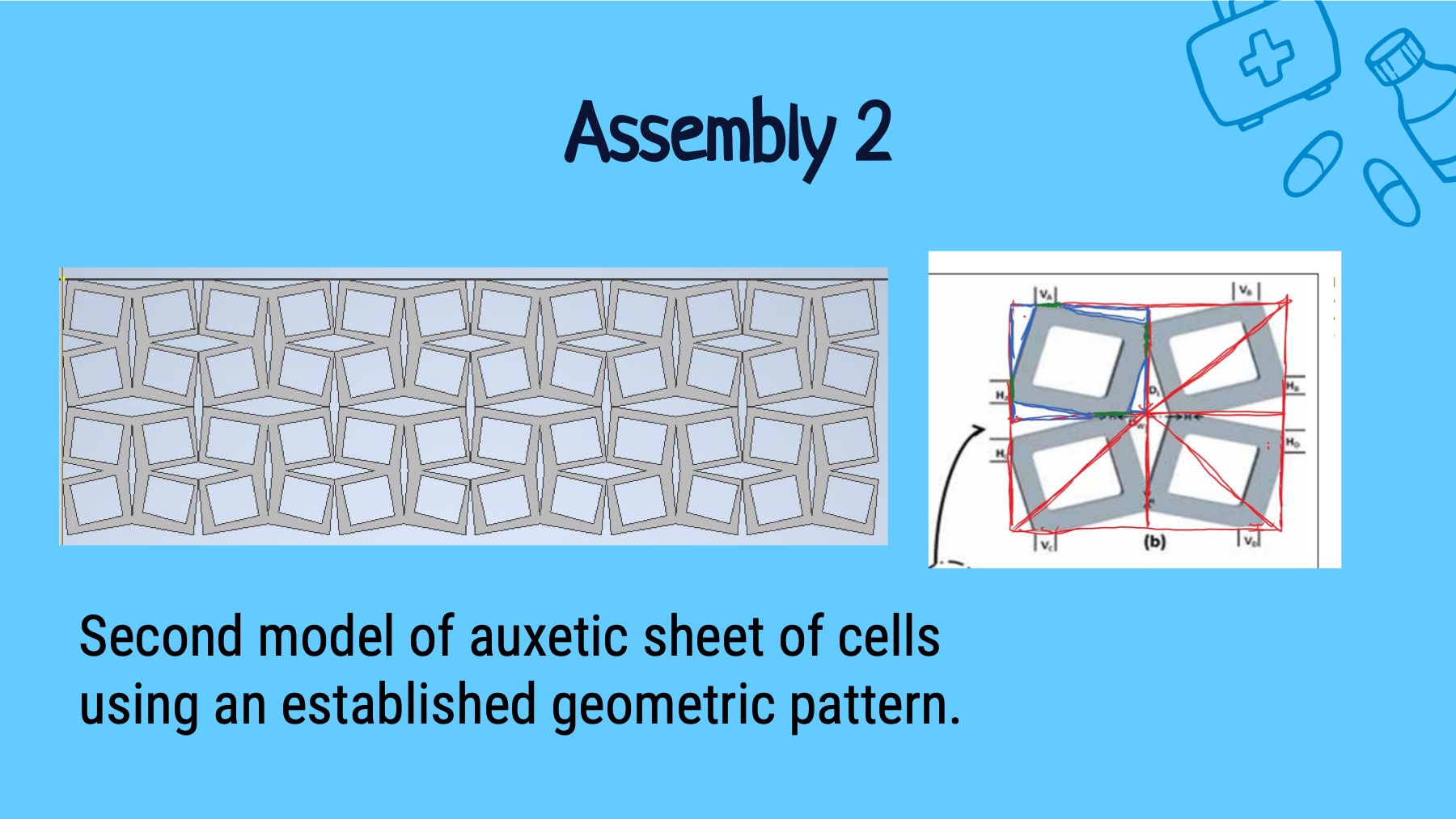
Assembly 2
The second assembly path refines the build strategy and clarifies how the prototype pathway evolved.
- Shows how the assembly approach evolved across alternatives.
- Makes the prototype pathway clearer before the printed model appears.
Prototype
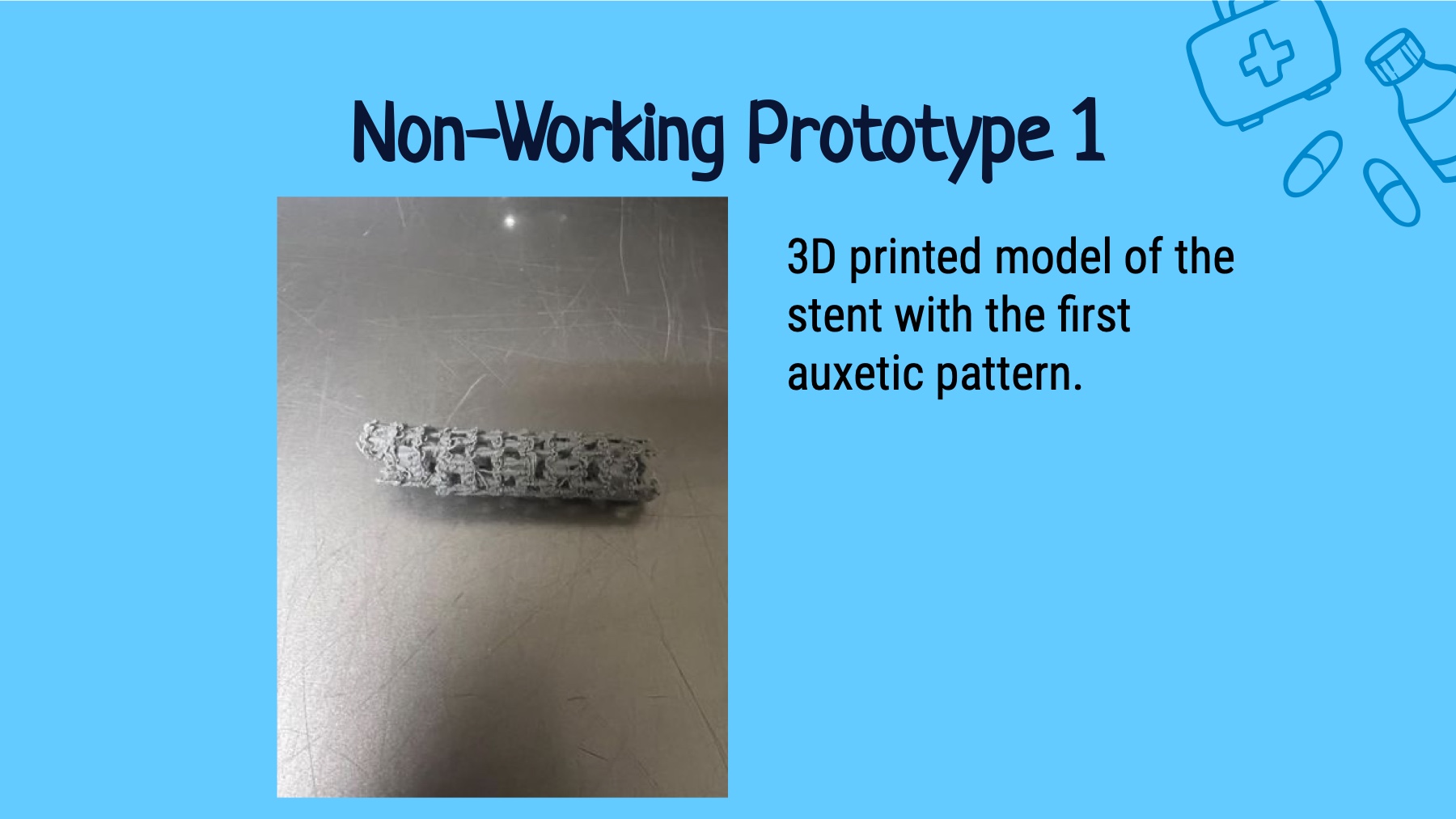
Non-Working 3D Print
The 3D print documents a physical fabrication attempt and shows where the design still needed refinement before it could function as intended.
- Shows real prototyping evidence instead of only CAD.
- Explains what was learned before simulation and final analysis.
Testing Setup
Test Plan & First Result
The pressure-simulation plan is paired with the first result it produced, connecting the setup directly to the measured behavior of the stent model.
- Defines the pressure value and simulation assumptions used for the model.
- Shows the first output from that procedure before the final prototype analysis.
Final Evidence
Prototype Analysis Outputs
The final prototype analysis brings together the stress visualization, displacement behavior, pressure response, and safety-factor distribution across the auxetic stent geometry.
- Provides direct evidence for how the modeled pattern responds under load.
- Connects the selected geometry to measurable stress and displacement behavior.